Students are tired of answering questions. Let them make decisions.
Classmoot is a whole-class simulation. You tell the story. Your students discuss, vote, and live with the consequences.
- One class period
- No student devices
- No logins or student data
- Nothing to install
Not another quiz
Quiz games reward the fastest answer. A moot rewards the best reasoning.
A Classmoot simulation
- Students look up and talk to each other.
- No one right answer. Four good ones.
- Discuss it, vote on it, live with it.
- The best reasoning wins the room.
- Every group has to defend its choice.
How a moot runs
You tell the story. The simulation keeps score.
Every vote follows the same rhythm, so once you have run one moot you can run them all.
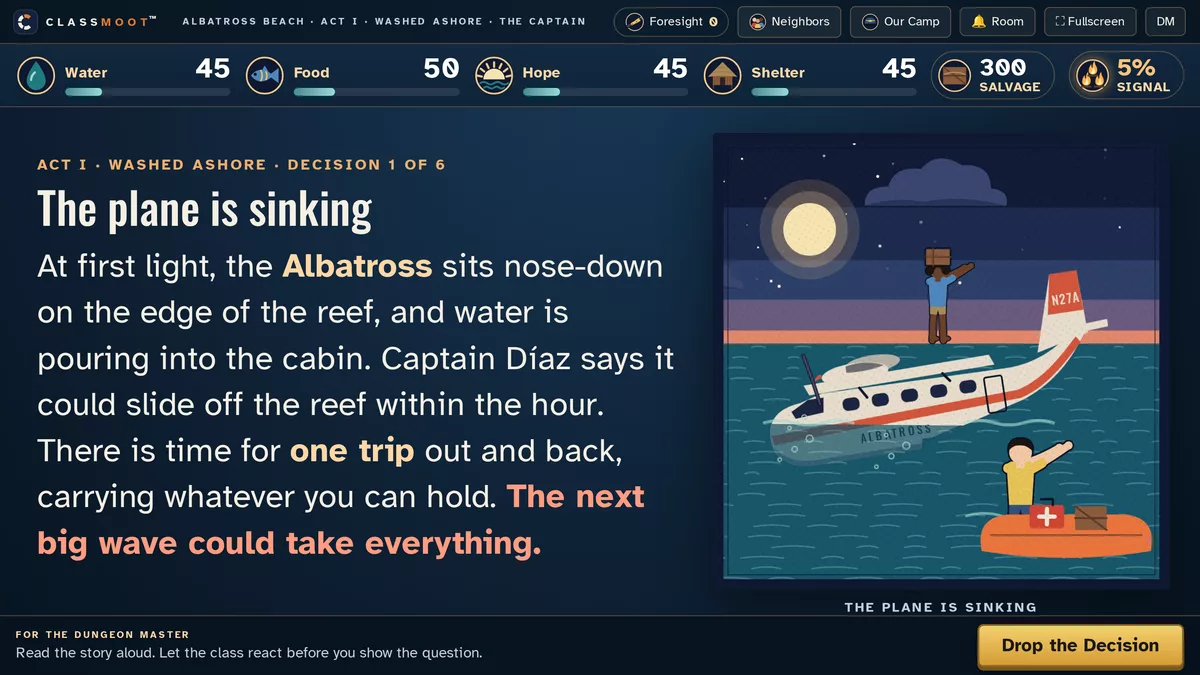
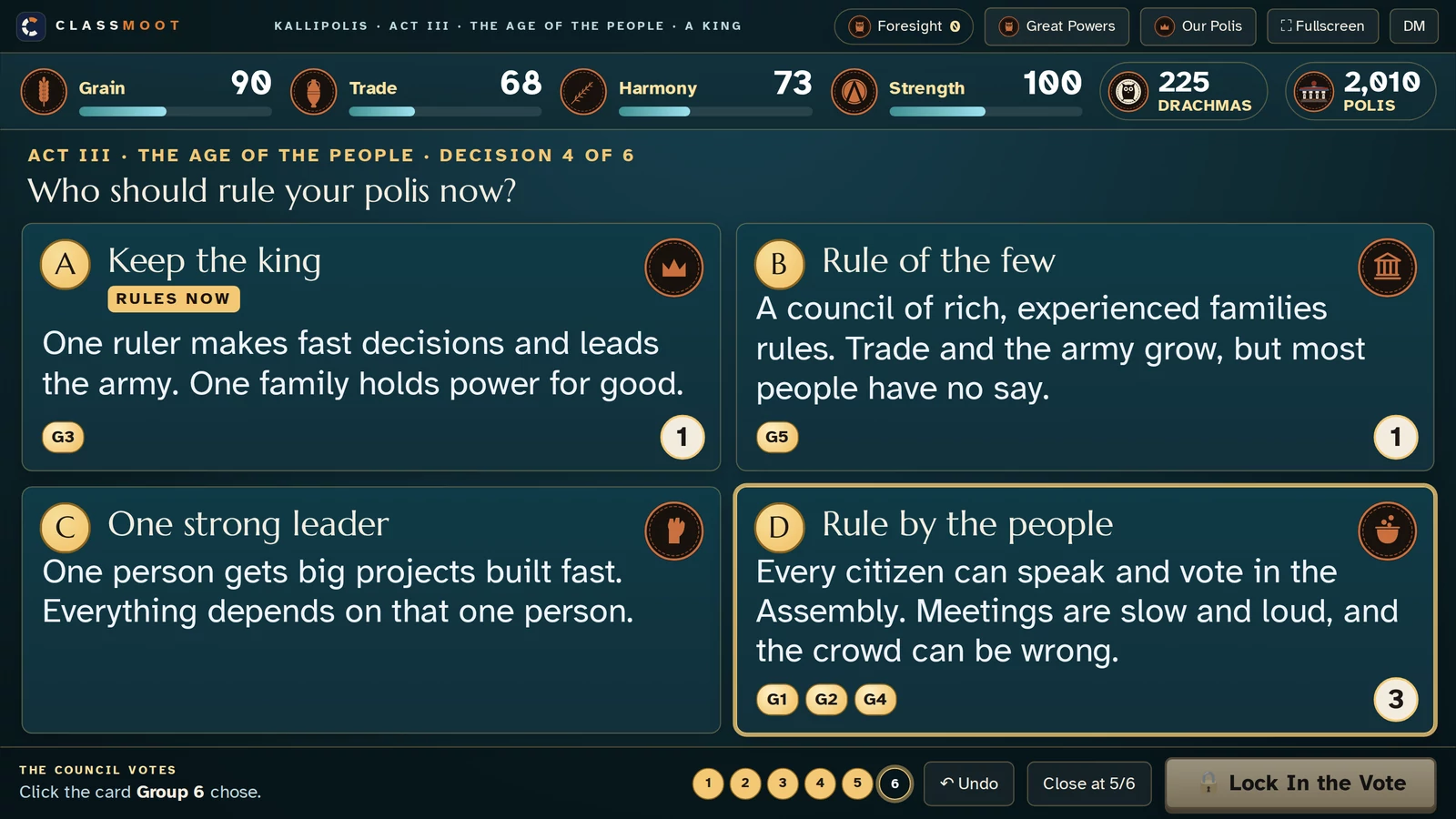
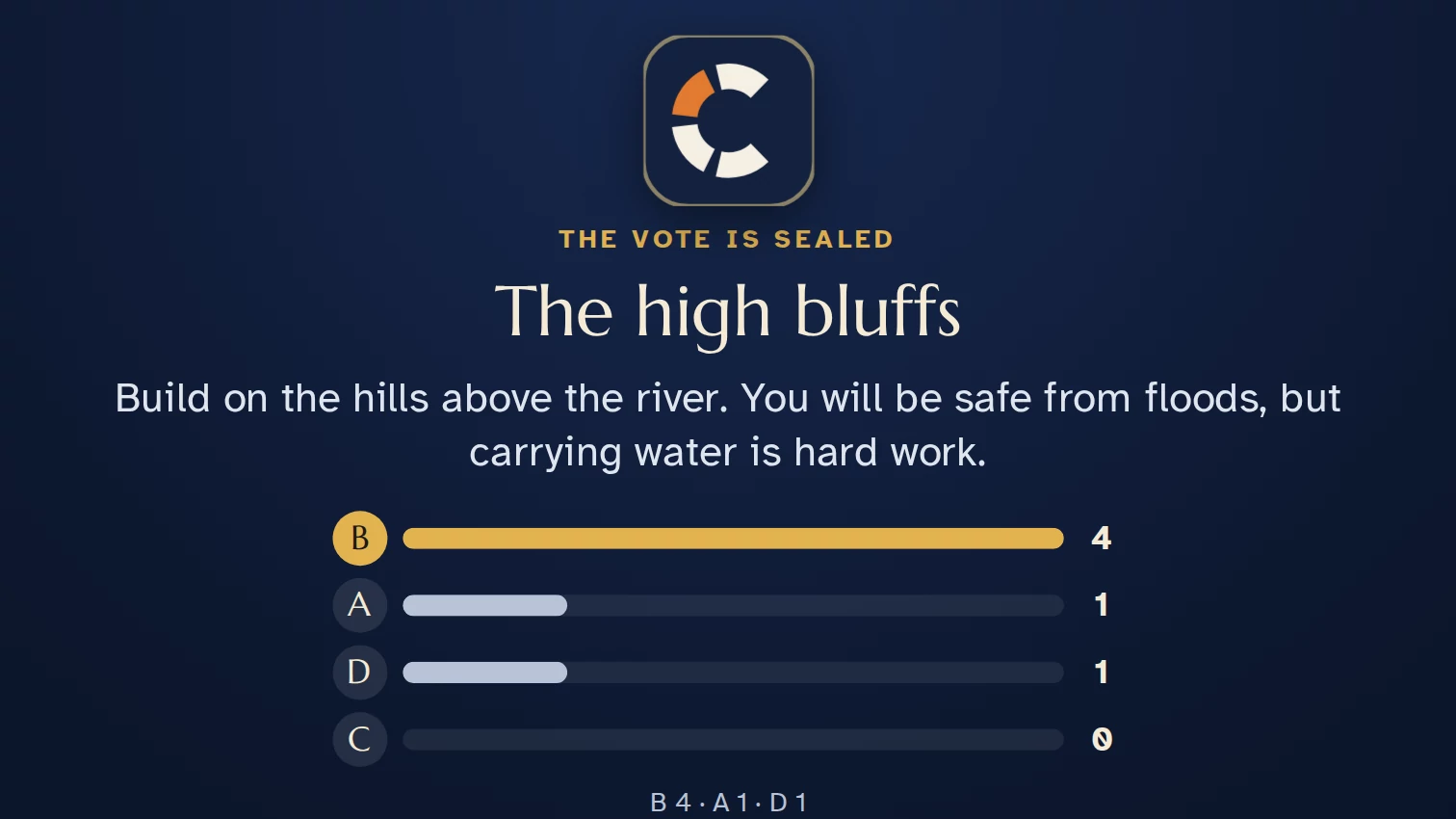
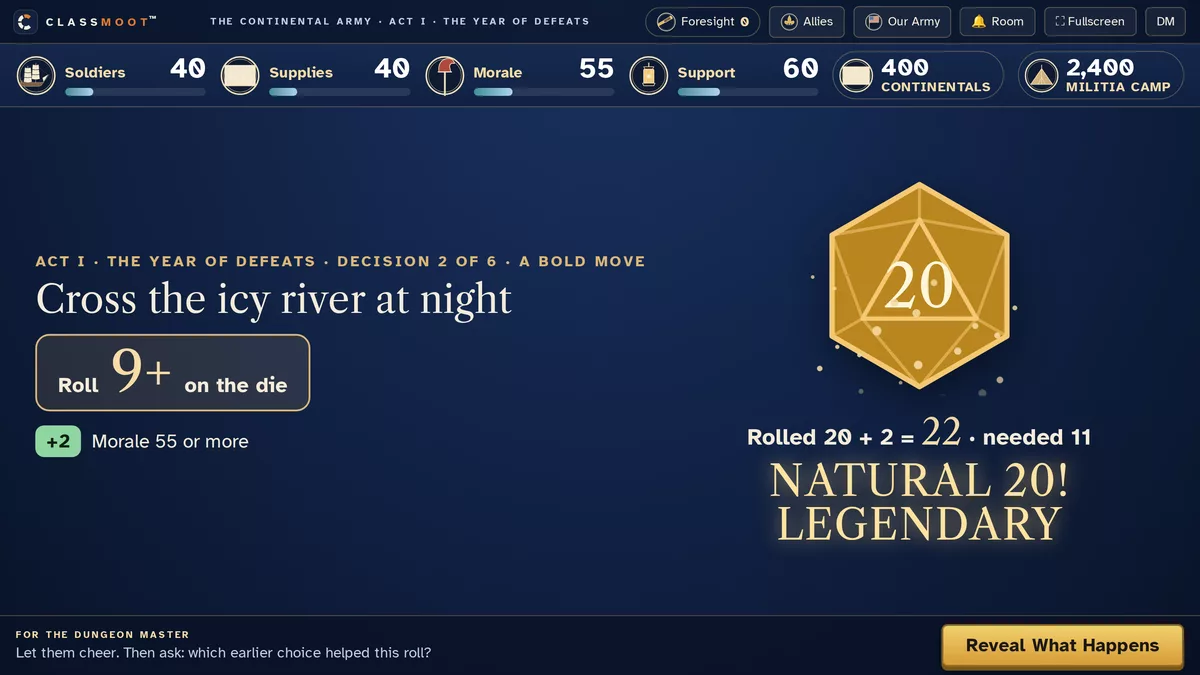
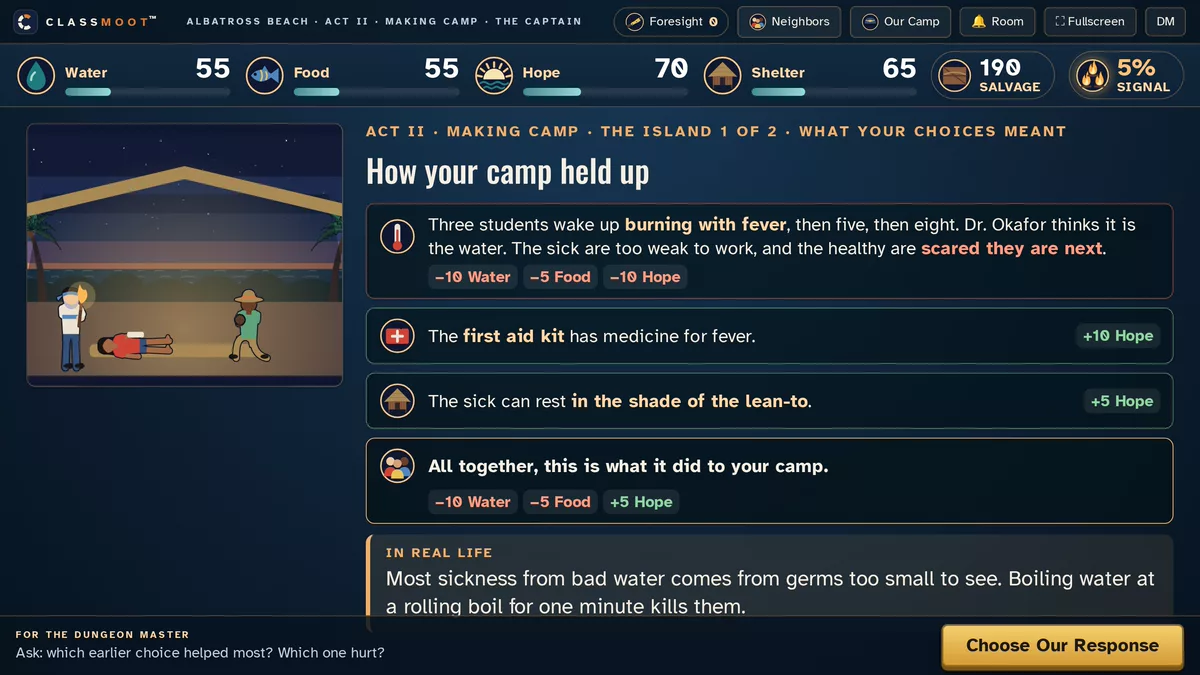
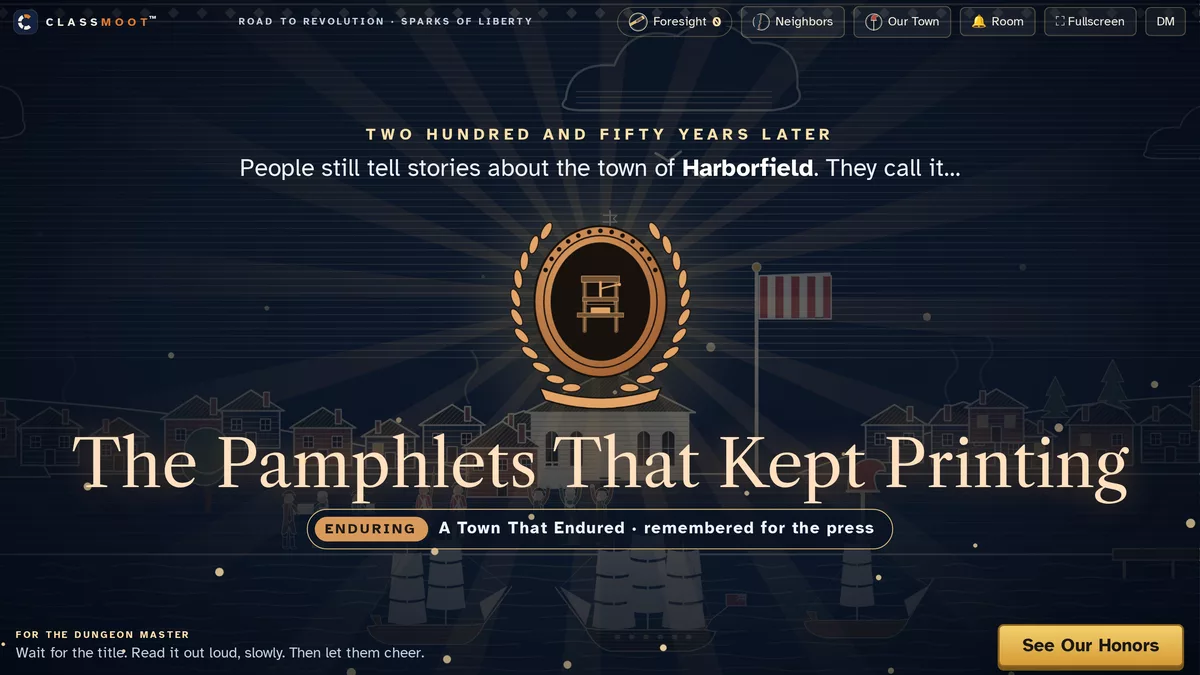
You are the Dungeon Master
The screen supports the teacher. It never replaces the teacher.
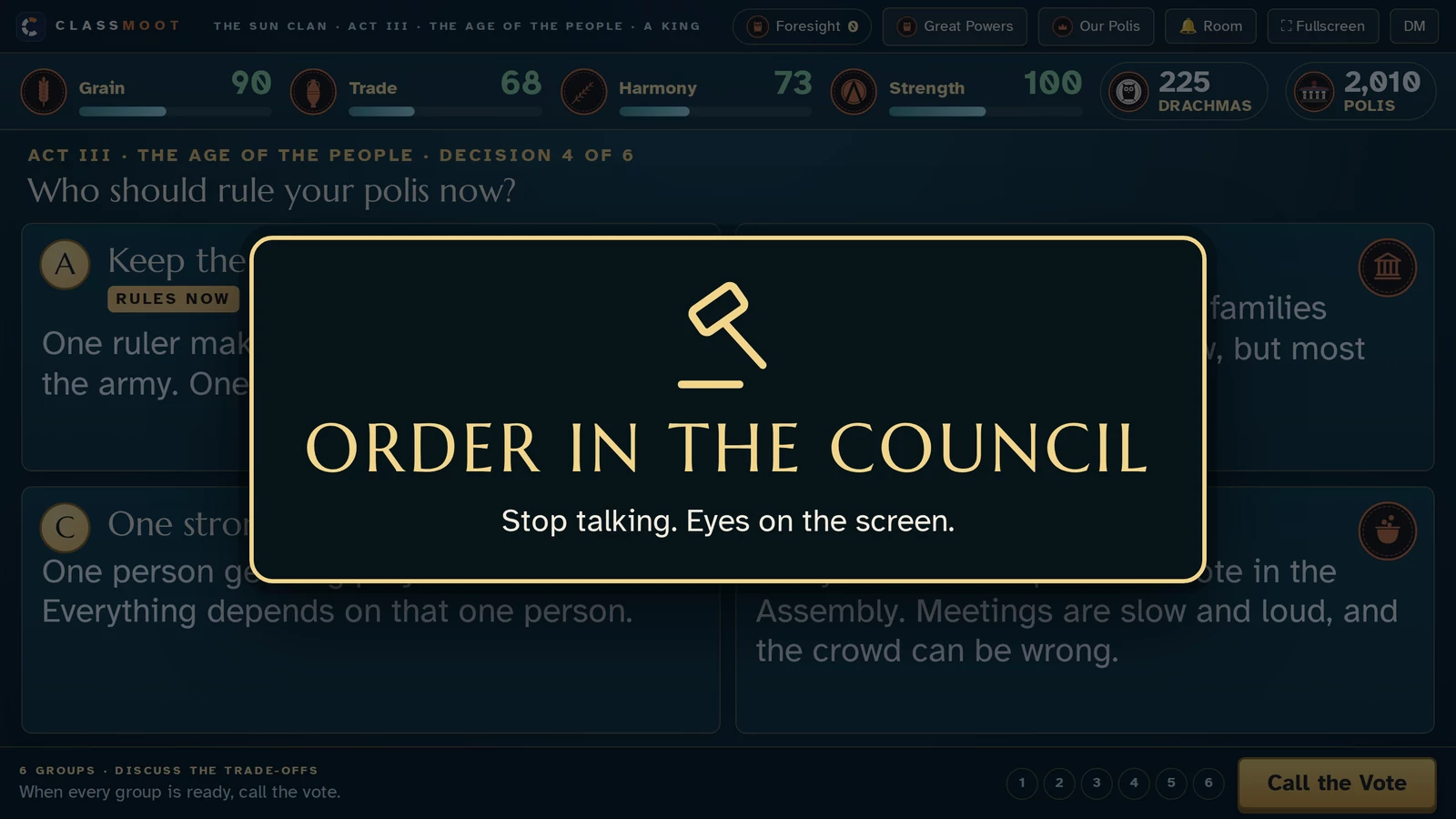
A good moot gets loud. That means it is working. One key takes the room back, and your class learns every signal before the first vote.
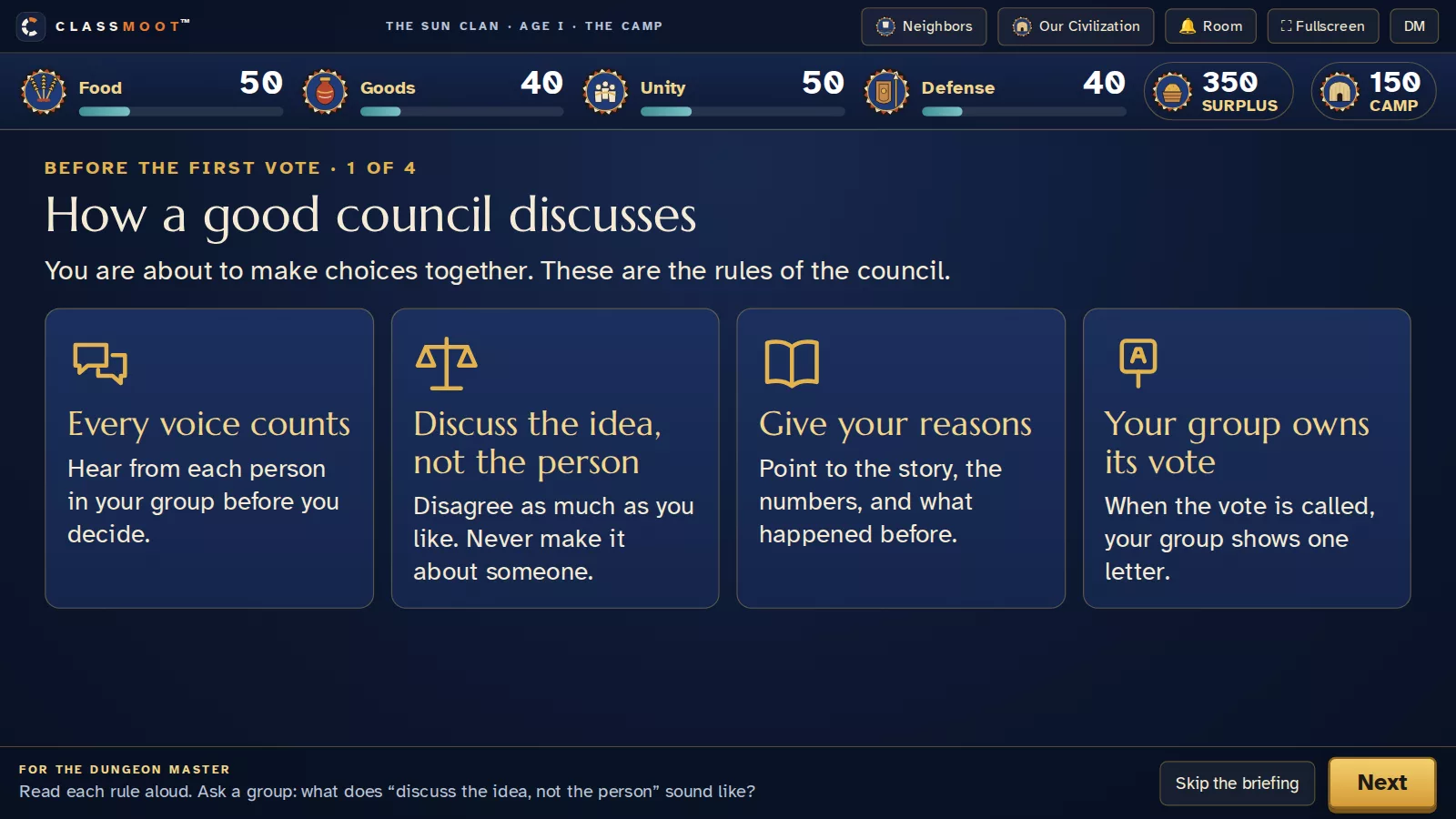
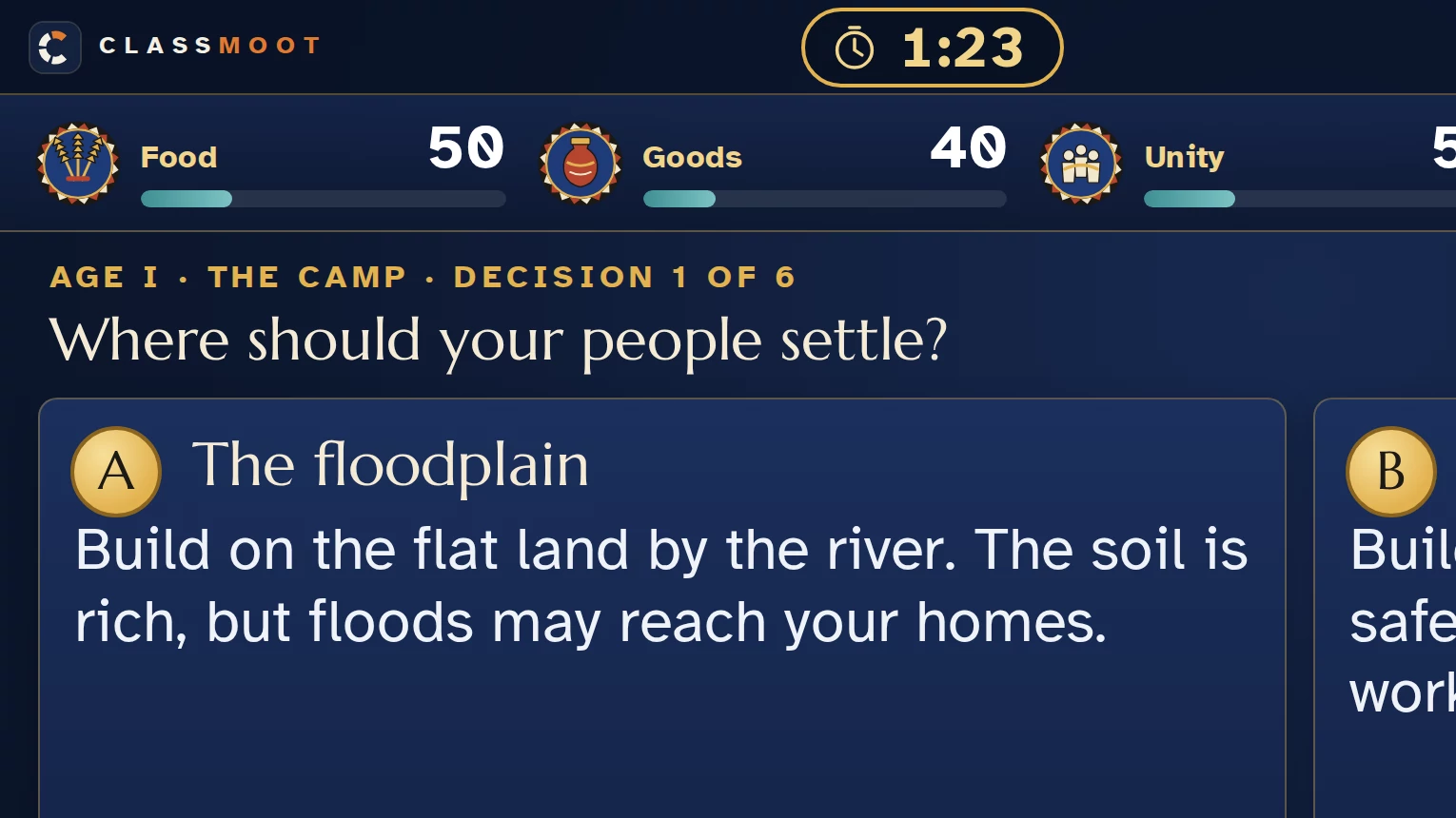
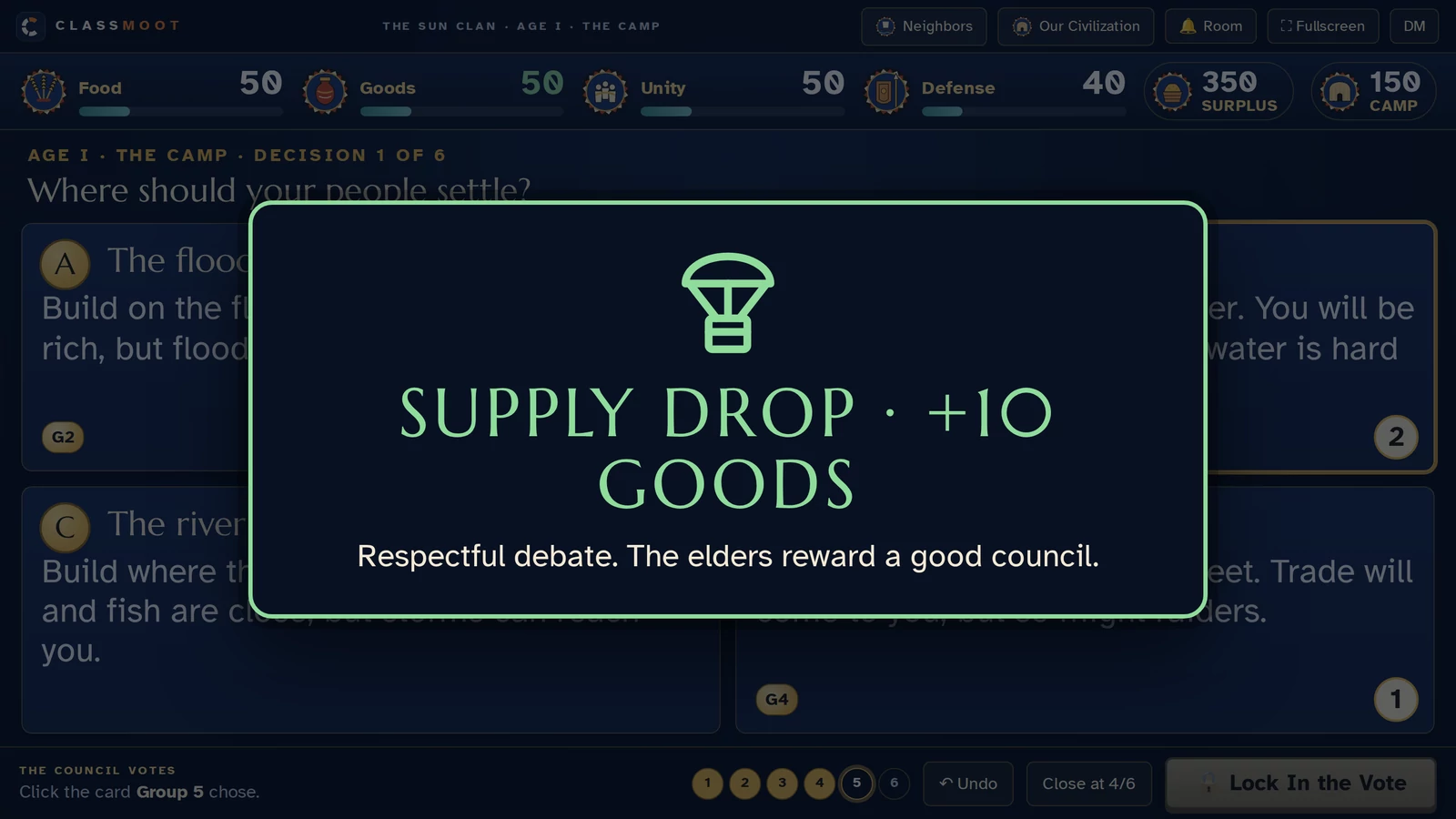
The Moot Library
Pick a world. Try it with your class today.
Every free demo is the real simulation: the opening votes, a world event where earlier choices come back, and a first look at the title your class is heading toward. It runs right here in your browser.
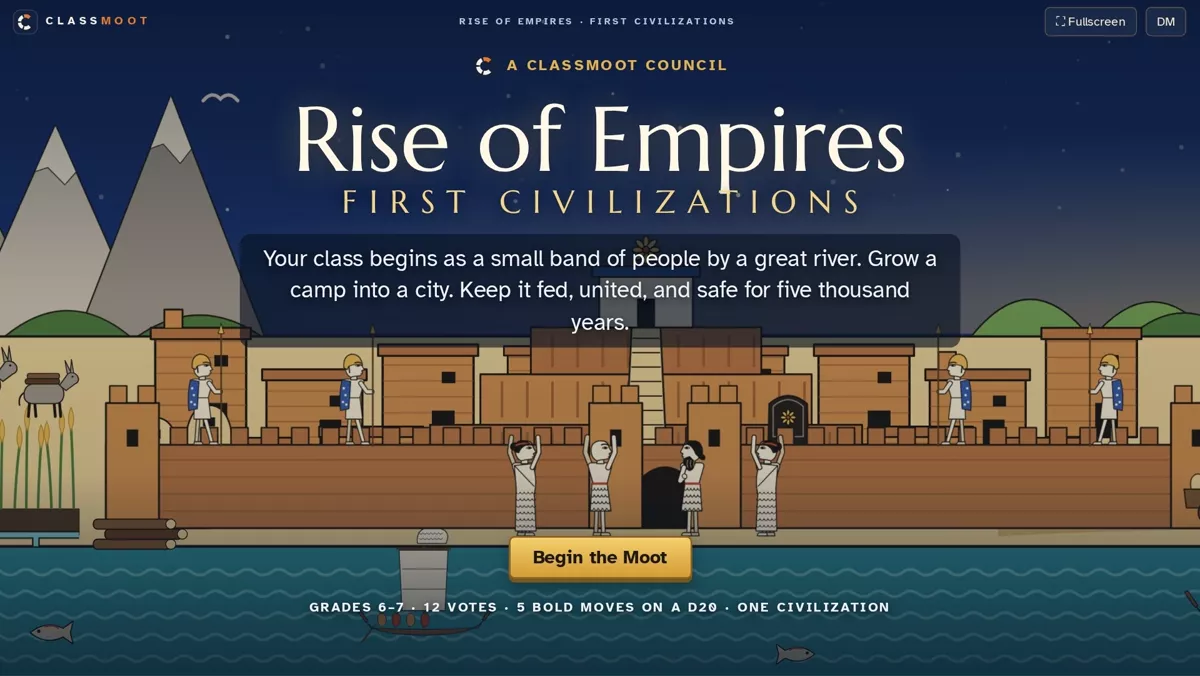 First CivilizationsRise of Empires · Social studies
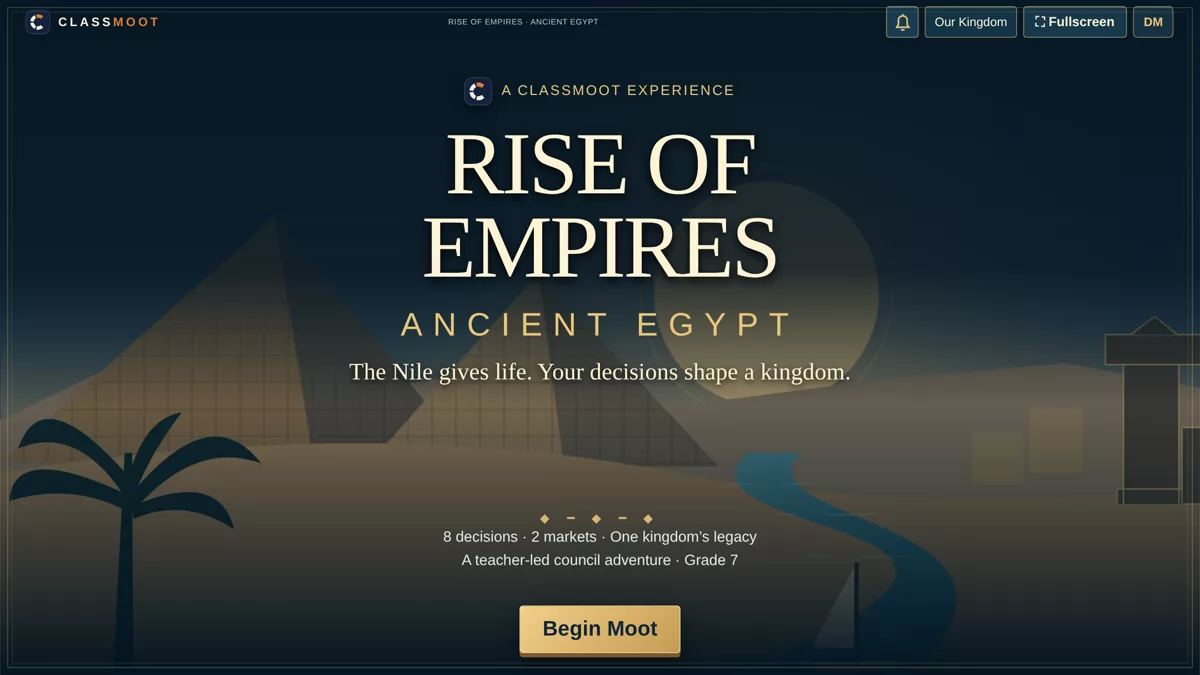 Ancient EgyptRise of Empires · Social studies
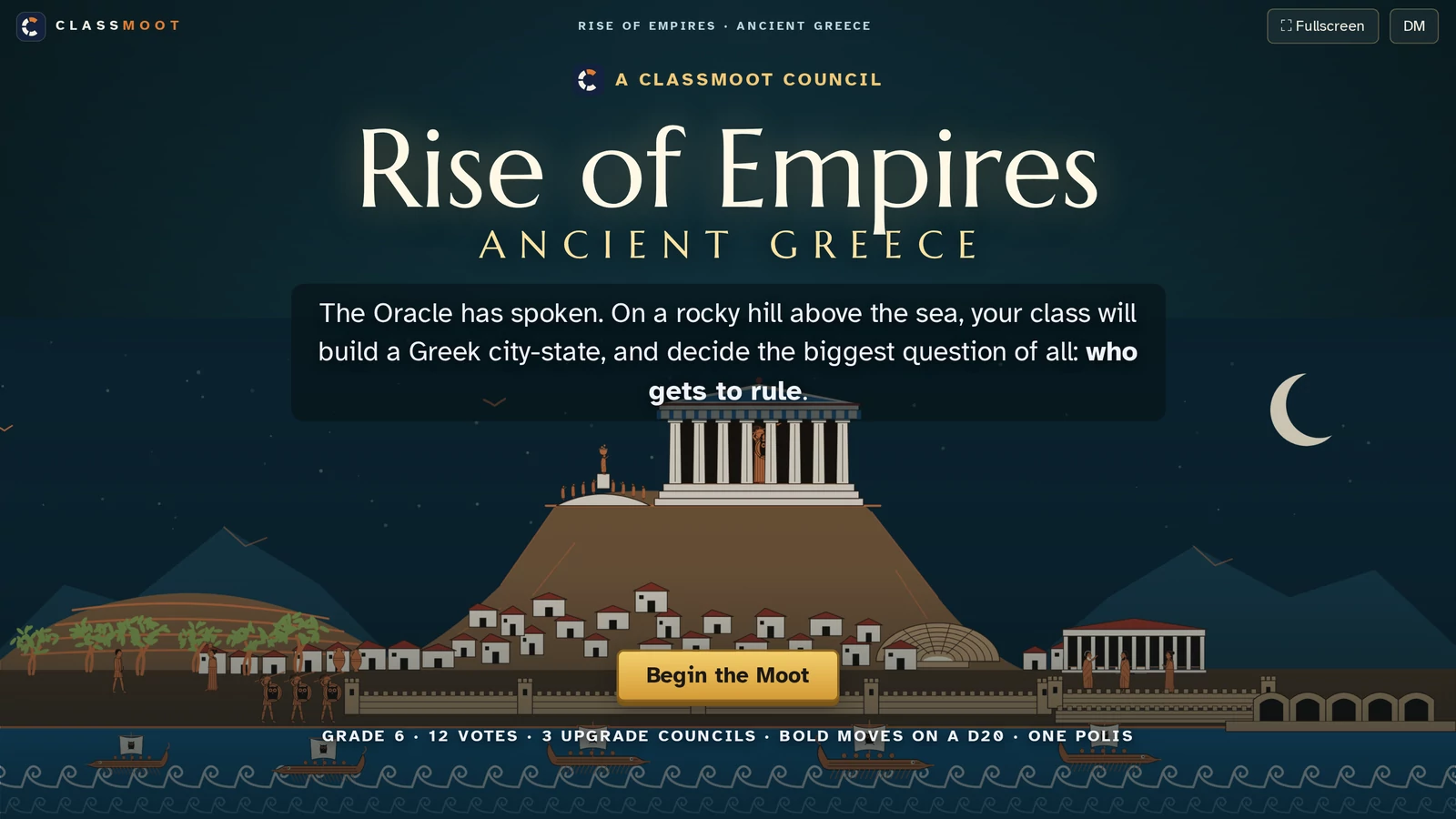 Ancient GreeceRise of Empires · Social studies
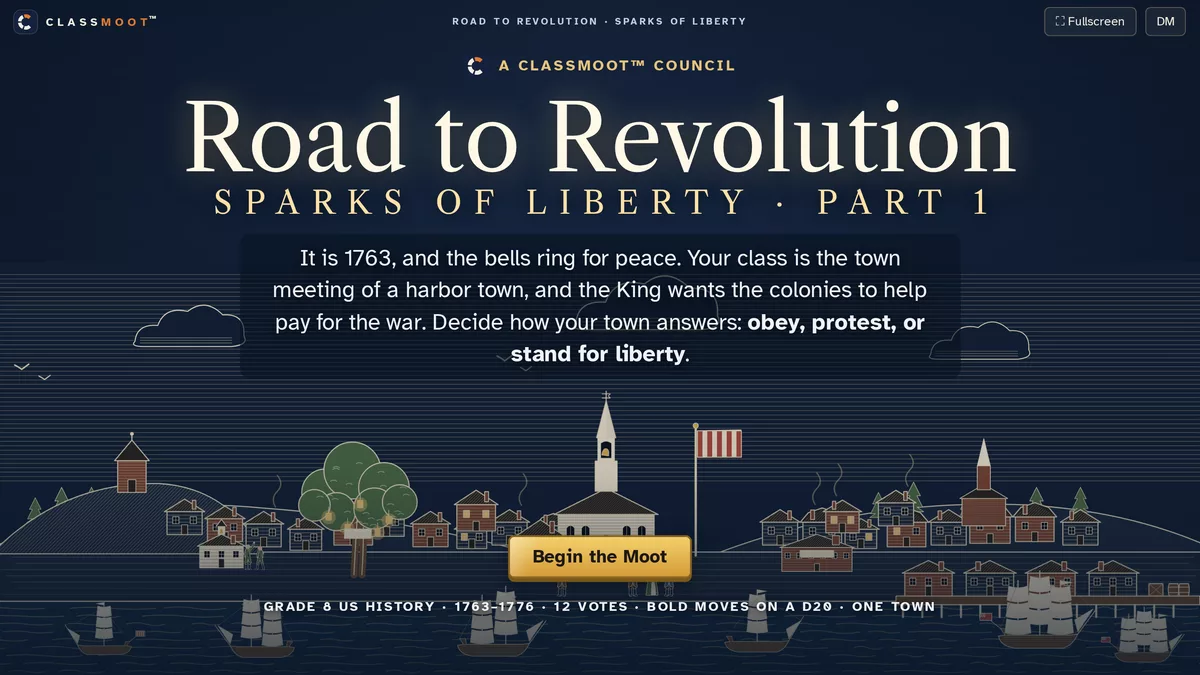 Sparks of LibertyRoad to Revolution · Social studies
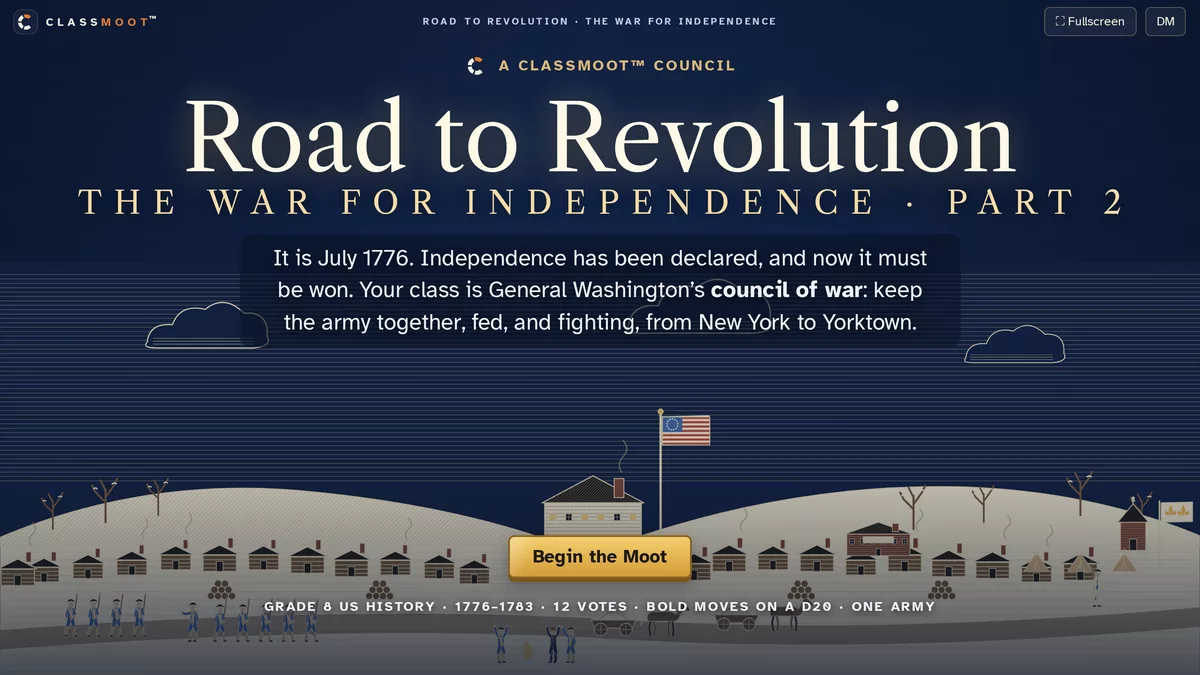 The War for IndependenceRoad to Revolution · Social studies
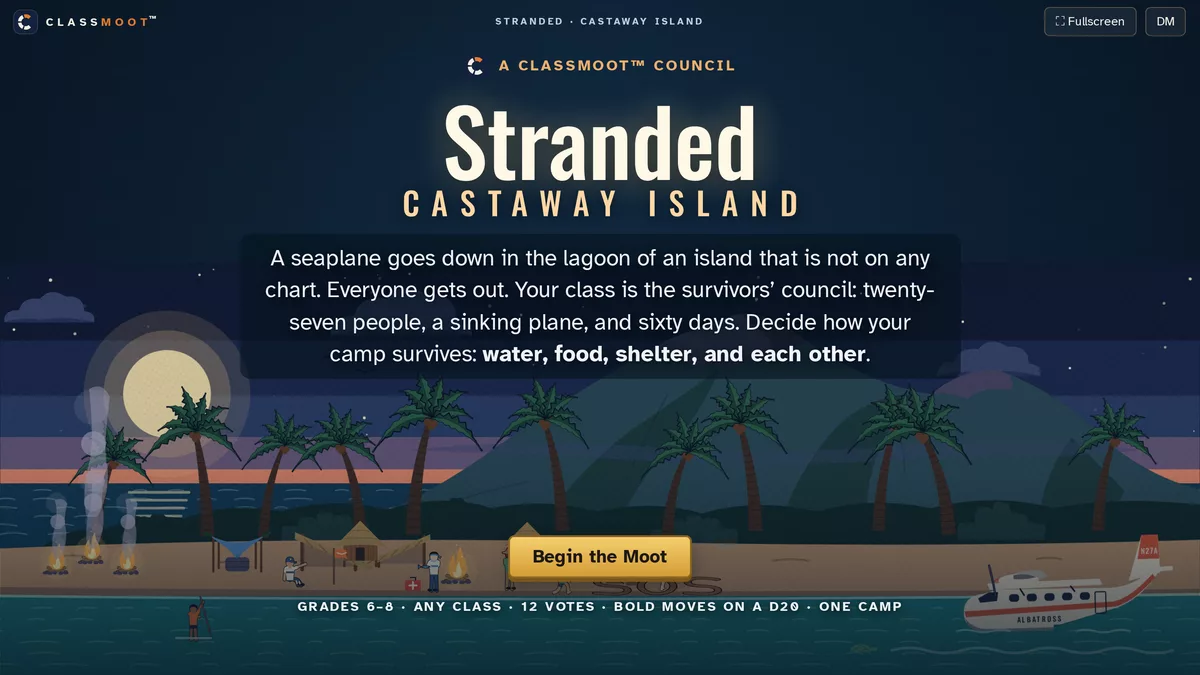 Stranded: Castaway IslandSurvival science · Any class
Browse the Moot LibraryEvery moot, its free demo, and a teacher trailer.
You pick what comes next
Vote on the next moot.
Six moots are ready. Teachers decide what gets built next. Four choices, one vote each, just like your class.
Pick one. The mark lights up the part for your letter.
Built by a teacher, still in the classroom
“The best days in my classroom are the ones where students disagree about something that matters and have to talk it out.”
I teach middle school, and I still do, every day. Classmoot started as something I made for my own students: a story where the class makes the hard calls and lives with what it decides. The first time I ran First Civilizations, I ran it six periods in a row. My students asked if they could run it back the next day.
I don’t want to build this alone. The best ideas will come from teachers running it in their own rooms. Tell me what your class needs, what worked, and what didn’t, and vote on what gets built next.
Founder of Classmoot, middle school teacher
Questions teachers ask
Before you run your first moot
Do students need devices?
No. The whole class plays on one projector or display. Groups discuss, then hold up a letter to vote.
What do I need to run it?
A computer with Chrome or Edge, and a projector or display. Each moot is one file that works offline: no accounts, no network, nothing to install.
How many groups can play?
Two to eight voting groups. Each group holds up a letter and you click its card. Or play as one whole class.
Can the back row read it?
Yes. Big type, checked contrast, and a bright-room screen for lit classrooms.
How long does a moot take?
One class period, about 50 to 55 minutes. I ran First Civilizations in a single period, six periods in a row. A class that wants longer discussions can stretch it to two, and you can stop anywhere and pick up later.
What if the room gets loud?
That means it is working, and you still need your voice. One key sounds a gavel, a chime, or a horn, each with a big card on screen. A discussion clock calls the vote when time is up, and you can send a supply drop to a council that discusses with respect. A short Council Briefing before the first vote teaches the class every signal and what earns a drop.
What is a bold move?
In most moots, a few choices carry a die. Pick one and the class rolls a d20 on screen, or you roll a real one. Earlier choices add to the roll. A high roll pays off big and a low one costs something, so groups have to discuss whether the risk is worth it.
What if I teach five periods?
Each class gets its own save on your computer, so every period picks up exactly where it left off.
What grades is it for?
Grades 6 to 8. Every moot is written for the grade named on its title screen.
Is there a free version?
Yes. Each moot has a free demo with the opening votes and a world event. Play it in the Moot Library, or download it from Teachers Pay Teachers.
Where do I buy the full moot?
On Teachers Pay Teachers. Each moot includes the simulation, the Teacher Guide, a Setup Card, the Student Decision Briefs, and a title certificate for your class.
The Classmoot Council
A community for teachers who tell the story.
Classmoot is built with the teachers who run it. Vote on what comes next, ask for the moot your class needs, and tell me what would make it better.
Join the Classmoot Council.
Early demos, a vote on every new moot, and storytelling tips from teachers who run them. One email when there is something worth your time.